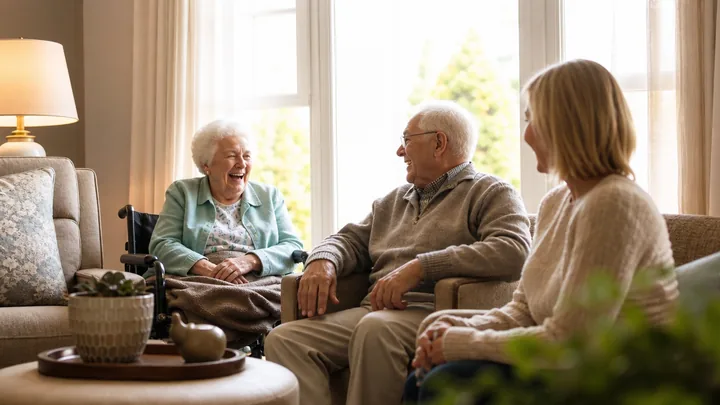
Certain visits do not fit visiting hours. The son who flew in from two time zones away for his father's decline; the daughter arriving for move-in week from another province; the spouse who never actually leaves at eight o'clock because sixty years of marriage does not observe a schedule; and the vigil: the family keeping watch in the last days, sleeping in shifts on furniture never meant for it. Every community of size hosts these long visits constantly, and most host them the same way: a recliner dragged into the room, a hotel forty minutes away, a nurse pretending not to notice the son asleep in the lounge at 2 a.m. The gap is strange, because the hospitality is cheap and the stakes are the highest the building ever sees. A community that gives families somewhere to stay (a guest suite, a fold-out done properly, a vigil protocol with a cot and coffee) is designing for the visits people remember at the funeral, and describe for years after it.
Principle vs. proven
That family presence matters at transitions and at end of life is about as safe a claim as care makes; hospice practice treats supporting the family's presence as core, and guidance in the vein of the National Institute on Aging's end-of-life material assumes families at the bedside. Whether on-site guest accommodation changes measurable outcomes is not something we would claim. The case is humane and commercial, not clinical: distance and exhaustion are the enemies of presence, and buildings can remove both. The design patterns below are hospitality craft and hospice-borrowed practice, offered as such.
The guest suite: a small hotel with one job
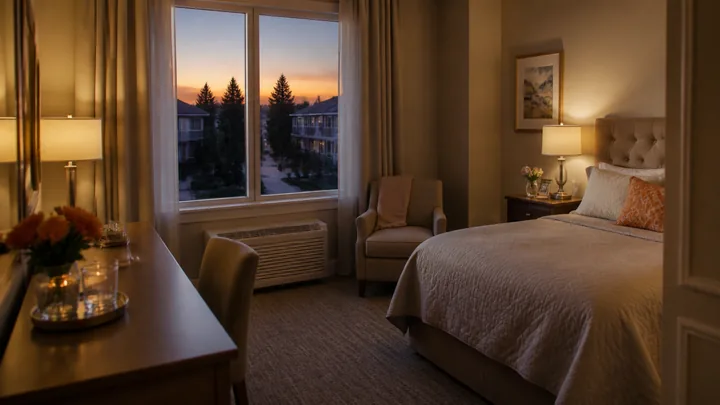
The flagship answer is one or two bookable guest rooms inside the building: a bed, a private bathroom, simple and genuinely clean, at a modest nightly rate that covers housekeeping. The design brief is short but strict: real hotel basics done properly (good mattress, blackout capability, towels that don't apologize), acoustic separation from resident corridors in both directions, and a location that lets a guest come and go at odd hours without crossing the building's secured or sleeping zones: near the lobby end, with after-hours entry solved by code or key, not by waking the night staff. What the suite must not be: the converted resident room that still reads clinical, the storage overflow with a bed in it (see the storage article's gravitational law: an unowned room fills), or a marketing amenity so hedged with rules that it hosts six nights a year. Run it like a tiny B&B with a named owner, a same-day booking path, and priority rules published in advance: vigil first, move-in and crisis second, convenience third.
The in-room overnight: policy plus furniture
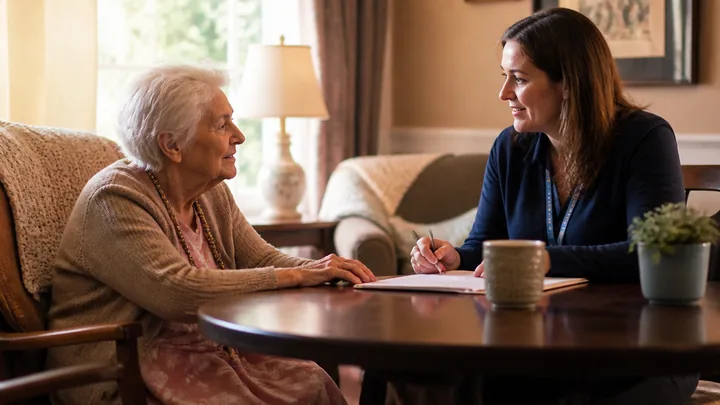
Most long visits want to be in the room, and the building's job is to make that survivable instead of heroic. The furniture half: a sleeper option that deploys without a maintenance call: a proper fold-out loveseat or a stored cot fleet that staff can deliver made-up within the hour, plus bedding kept for the purpose (the vigil family given fresh linens without asking has been told, in the building's plainest language, you belong here). The policy half matters more: overnight family presence should be a stated right in defined circumstances (end of life, acute decline, transition nights) not a nightly negotiation with whoever holds the shift. Write it, print it in the family handbook, and brief the night staff, because the 2 a.m. confrontation between an exhausted daughter and an uninformed aide is a reputational event no policy binder survives. Private rooms make this straightforward; shared rooms need the roommate's dignity managed with equal explicitness, which sometimes means the guest suite is the answer precisely so the roommate keeps her night.
The vigil: the building's most important hospitality
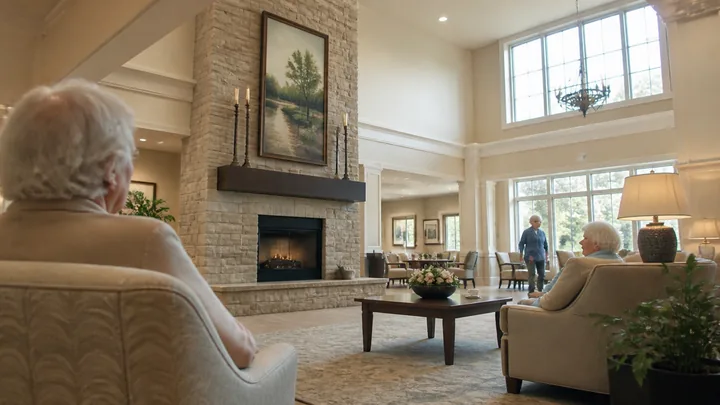
End-of-life watches deserve their own design attention, borrowed shamelessly from hospice houses. The family keeping vigil needs: rest in reach (the cot in the room, the guest suite for shifts, and explicit staff encouragement to use both: families run themselves to collapse without permission to sleep); food and coffee at all hours without leaving the floor (a stocked family pantry or even a dedicated tray service: the casserole instinct needs an address); somewhere to step out: the family room for the phone calls that must be made, a porch or terrace for air and composure; and children accommodated, because grandchildren belong at some vigils and need the child corner's equipment nearby when the room becomes too much. Small operational graces compound: parking rules suspended, a place to charge phones, the offer of the shower. None of this is architecture beyond one pantry and one suite; nearly all of it is preparation and permission, decided before the week nobody can think clearly in.
The distance family: hosting between visits
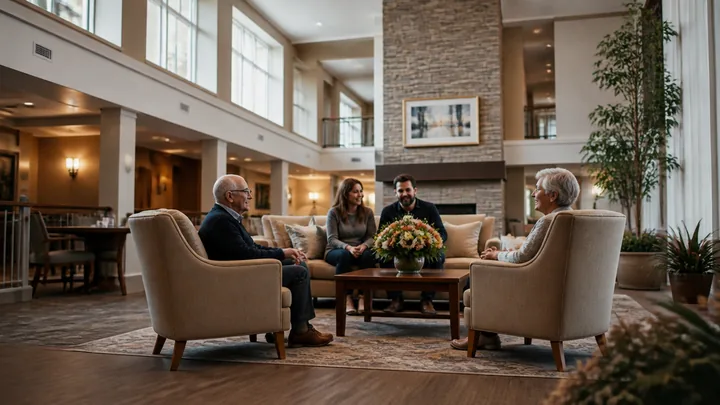
Accommodation is also about the families who cannot come often. The building hosts them virtually: the video call handled with the same seriousness as the family room's conference link: a good device, a staff habit of facilitating calls for residents who can't manage the technology, and a private, pleasant place to take them (the resident shouting at a tablet in the public lounge is the fishbowl problem again). And it hosts them informationally: the photo of mother at the garden bed sent unprompted, the note after the birthday dinner. These are operations, not design, but the camera needs decent light and a quiet corner, which is design, and which costs nothing to assign.
Boundaries that keep it workable
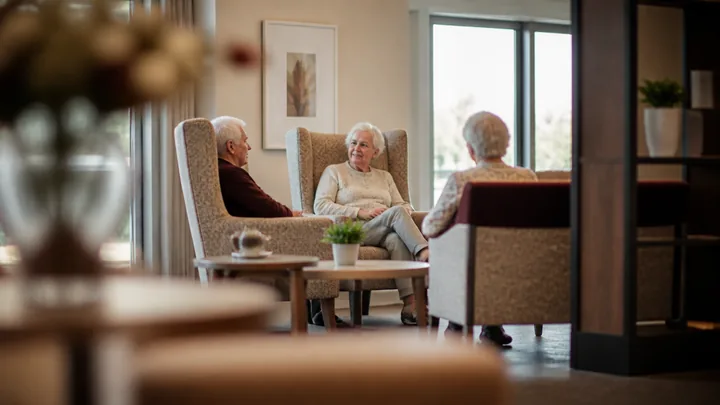
Hospitality this personal needs edges, stated kindly and in advance: maximum stays for the guest suite (a week, renewable by conversation, so it never becomes an unofficial apartment), house rules that protect night staff and sleeping residents, and clarity about care: an overnight guest is a guest, not an informal caregiver, and the building's duties don't transfer to the cot. Communities that write these boundaries down host more generously, not less, because staff empowered by a clear policy stop defending the building with improvised refusals.
The economics, briefly and without embarrassment
The business case is real and worth stating plainly. Families choosing between communities weigh their own future logistics more than they admit; "there's a guest suite for when you visit" answers a question every out-of-town adult child is silently asking on the tour. Occupancy decisions after a death are made by families, and the vigil handled generously is the strongest loyalty event a community ever runs. Referrals flow from funerals more than the industry likes to say out loud. A guest room that covers its housekeeping costs is, on any honest ledger, one of the highest-yield square-footage decisions available; it simply pays in a currency the monthly P&L doesn't itemize.
The audit
Reconstruct your last three vigils and your last three fly-in family crises: where did each family sleep, eat, take their phone calls, and break down, and what did the building offer at each point versus what staff improvised? Then walk the candidate spaces: is there a room that could become the guest suite, a cot fleet and linen set that could exist by Friday, a pantry shelf that could be stocked this week? Write the overnight policy this quarter and put the vigil kit in a closet with a checklist taped inside the door. Almost every item is furniture, linens, and a decision. What they buy is presence: the thing families will measure the whole experience by, in the week when it mattered most.
Sources and scope
These primary and research sources anchor the subject area; they do not turn every design recommendation in this article into a proven outcome. Verify current law, adopted code, licensing rules, care plans, and clinical requirements for the specific property.