Jump to a section
Find the decisions that cause confusion
Choose a specific journey and ask staff where assistance is regularly requested. Is the destination hidden, is the sign difficult to read, or do several doors look alike? Record the location and situation without labeling a resident as the problem.
Work with the care team and residents' usual support arrangements. A building review does not explain every change in orientation or behavior. Sudden changes need appropriate clinical attention rather than an immediate redesign.
Use clear names and visible destinations
Use familiar room names consistently on signs, schedules, and staff instructions. If the sign says “Dining room,” avoid referring to it as “The Conservatory” elsewhere unless that is genuinely the name residents recognize. Review wording and symbols with the intended users; do not assume a picture communicates the same meaning to everyone.
Place cues where a decision is made and confirm they can be seen from relevant approach directions and seated positions. Where possible, make the room's use apparent through its entrance and arrangement.
Review contrast and lighting together
Check whether a useful handle, sign, or chair can be distinguished from its background under the room's actual lighting. A sample that reads well on a desk may disappear under a shadow or behind a reflection. Review signs after protective glazing or finishes are added.
The Alzheimer's Association's home-safety guidance emphasizes well-lit routes and reducing tripping hazards. Apply environmental changes through the community's own care and building review processes rather than copying domestic measures into a regulated facility.
Choose landmarks with a clear purpose
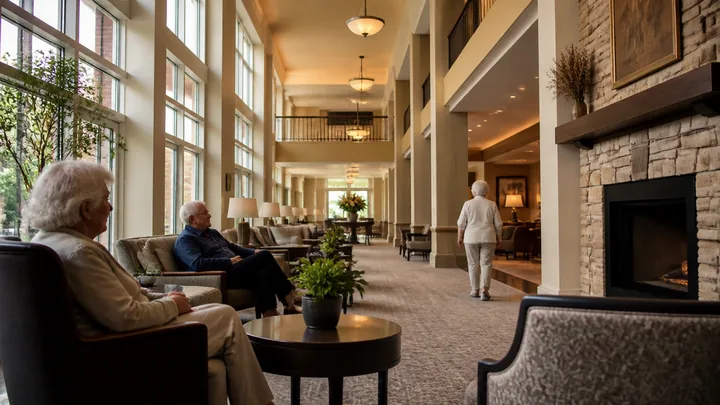
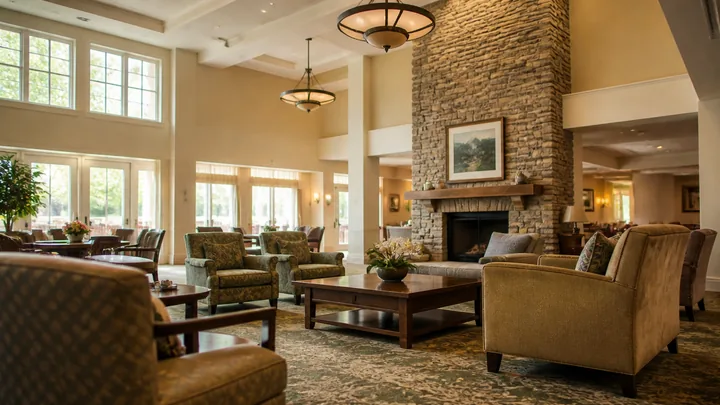
A distinctive fireplace, familiar display, or visible sitting area may help someone recognize a location. Use a small number of meaningful features rather than decorating every doorway differently. Ask residents or families what a personal cue represents before displaying it.
For example, a resident may recognize a photograph of their own garden more readily than an attractive stock landscape. Obtain permission, protect personal information, and check whether the cue remains useful. For personal door displays, review familiar names, photographs, or objects with the resident and care team.
Test one change and keep the route consistent
Try a clearly defined change at one problem location. Ask staff to note whether residents still hesitate or need directions, using normal support and privacy procedures. Also record unintended effects, such as a new display attracting a queue at a narrow junction.
Do not disguise emergency exits, cover required signage, or change security arrangements as a decorating exercise. Keep those decisions with the qualified care and life-safety team. Your finished plan should identify the cue, its purpose, its location, and who will maintain it after installation.
Sources and scope
These primary and research sources anchor the subject area; they do not turn every design recommendation in this article into a proven outcome. Verify current law, adopted code, licensing rules, care plans, and clinical requirements for the specific property.