
Jump to a section
Record the setting and time
Ask the care team which situations need review and what can appropriately be observed. Note the room, activity, daylight conditions, competing sounds, and recent changes to the routine. Keep individual health information in the proper care record.
A sudden or unfamiliar change in behavior needs clinical assessment. Do not assume that a dim room, a visit, or the furniture explains it.

Review the transition into evening
Visit before sunset and again after the lights become the main source of illumination. Look for reflections in glazing, visible bright lamps, dark areas, and controls that staff find confusing.
Ask a lighting professional to review changes where needed. Document the intended settings and who operates them. Avoid unreviewed lighting schedules or claims that a particular lamp or color temperature will produce a clinical benefit.

Offer a quieter seating choice
Identify a place away from competing television, meal setup, or busy through-traffic. Make it understandable and easy to reach under the resident's usual support arrangements. Choose suitable seating and avoid filling the area with unfamiliar sensory equipment.
Ask what the person finds comfortable. Quiet does not mean dark, isolated, or locked. A space should support an agreed care approach, not become somewhere residents are sent because the main room is difficult to manage.

Coordinate the room with the people using it
Review staff work locations, family arrivals, cleaning, and activity changeovers. A room can become busier just as daylight fades. Decide whether an operational change is more appropriate than altering the room.
Keep staff approachable while protecting privacy. Record who will notice that a resident needs support and how support is obtained; improved sightlines do not replace that arrangement.
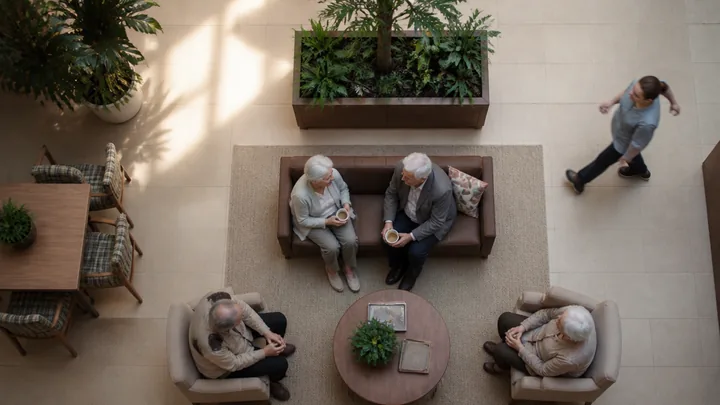
Review dining arrangements without changing care instructions
Look at where residents wait, how chairs and tables are approached, and whether several competing activities occur around dinner. Discuss any proposed change to meal timing or assistance with the care and dining teams.
Trial one approved environmental change at a time and review the result with those teams. Record what changed and any new difficulties. A room review is useful when it produces specific observations, not a promise that design will remove a complex clinical problem.

Sources and scope
These primary and research sources anchor the subject area; they do not turn every design recommendation in this article into a proven outcome. Verify current law, adopted code, licensing rules, care plans, and clinical requirements for the specific property.