Jump to a section
Listen while the room is being used
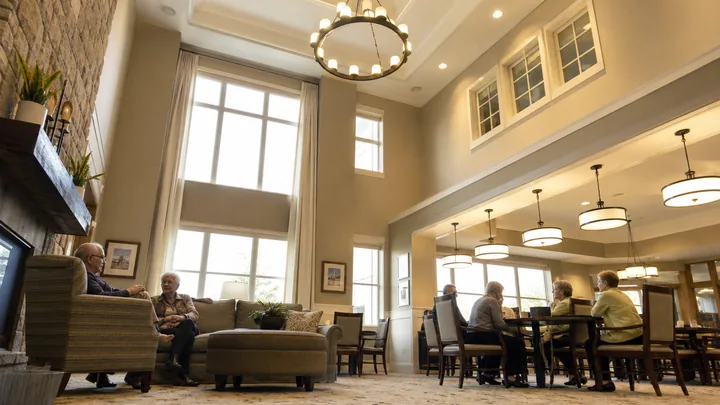
Visit during the activity that attracts complaints. Sit where residents sit and note the sounds that compete with conversation: a television, coffee machine, kitchen opening, chair movement, or several groups using the room differently.
Ask residents where conversation is easiest and hardest. A quiet morning inspection will not describe a full lunch service. Keep a short log of location, activity, time, and reported difficulty. Do not treat an uncalibrated phone reading as a formal acoustic assessment.

Address controllable sources first
Give televisions and music a purpose and an agreed operating routine. Schedule noisy tasks away from conversation-focused activities where practical. Ask maintenance to inspect rattling equipment and fit furniture with floor-compatible, manufacturer-approved components.
Move a noisy service point only after checking power, access, food-service needs, and staff travel. For example, relocating dish returns away from a small conversation group may help that group, but it should not obstruct another route or make service unworkable.
Arrange places for conversation
Try a smaller seating group where people can face one another without turning across a large coffee table. Preserve space for wheelchair users and companions within the group. Check whether the seats nearest the television are also the only usable seating choices.
Offer a quieter option with similar comfort and accessibility. Avoid making a resident choose between joining everyone else and being able to hear. Discuss individual communication or hearing-support needs with the appropriate staff rather than relying on room changes alone.

Specify acoustic treatment as a room system
If the room remains difficult, ask an acoustic professional to assess it and propose suitable treatment. The brief should include room dimensions, finishes, activity, occupancy patterns, and cleaning requirements.
Compare products using relevant test information, proposed coverage, installation details, and maintenance instructions. An upholstered chair is not a substitute for a designed acoustic solution. Ceiling, wall, and furnishing decisions also need to work with fire safety, lighting, and infection-control requirements where applicable.
Judge the result by the original problem
Repeat the same observation after changes. Ask whether residents can follow a conversation in the seats they normally use and whether staff have introduced a new competing sound elsewhere. Record remaining trouble spots rather than declaring the room fixed because it feels softer.
Your action list should name the source, the proposed change, the responsible person, and how it will be checked. That creates a useful brief for the next budget discussion and avoids repeatedly purchasing treatments without a defined goal.

Sources and scope
These primary and research sources anchor the subject area; they do not turn every design recommendation in this article into a proven outcome. Verify current law, adopted code, licensing rules, care plans, and clinical requirements for the specific property.