
Jump to a section
Choose what the space will offer
Write down the meal or activity, expected group size, season, and intended frequency. A coffee terrace may need a modest setup; a regular meal service needs a more complete operational plan.
Identify who sets up, serves, cleans, and decides when weather makes the space unsuitable. Avoid promising everyday availability before these responsibilities and resources are agreed.

Check the trip from kitchen to table
Trace staff travel with food and dirty dishes, including doors, changes in level, and the route through indoor resident spaces. Review food handling with the responsible dining team.
Mark approved places for service equipment. A convenient table location can become impractical if every trip blocks the only terrace entrance. Test the plan as a sequence, not simply a furniture layout.
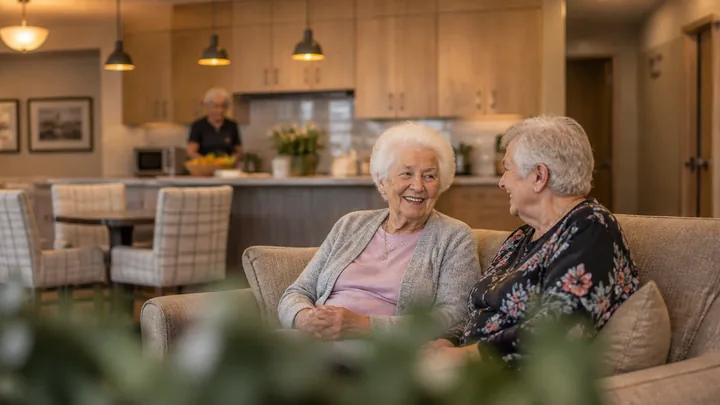
Review tables and chairs in the intended setting
Request suitability information for outdoor use, cleaning, exposure, and storage. Examine table bases, chair approaches, and the room around occupied seating. Review individual seating needs with the appropriate team.
Consider how furniture will be moved and secured according to its instructions. A heavy table might suit a permanent location but be difficult for a daily setup; lightweight furniture may need different wind and storage arrangements.

Plan shade and an indoor alternative
Observe the actual dining location at the proposed meal time. Shade at breakfast may not cover lunch tables. Assess wind, drainage, and the route back inside with the relevant professionals.
Use a clear operating plan for weather changes. Residents should not be left waiting while staff decide whether to relocate a meal. Keep the indoor alternative ready enough to use.

Include residents who need additional support
Review access, seating, service, and assistance with the people responsible for individual care. An outdoor offer should not depend on everyone carrying their own plate or moving furniture.
Start with a planned service of manageable size. Ask residents and staff about the journey, comfort, and meal setup, then adjust before expanding. Record the chosen furniture, layout, weather decision, and responsibilities so another shift can run the same arrangement.
Sources and scope
These primary and research sources anchor the subject area; they do not turn every design recommendation in this article into a proven outcome. Verify current law, adopted code, licensing rules, care plans, and clinical requirements for the specific property.