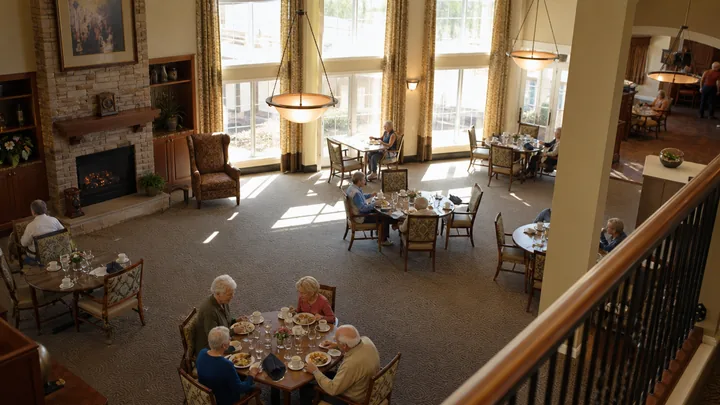
Jump to a section
Look at the table from a seated position
Set a table as it would be for a meal. Check whether plates, utensils, menus, and drinks are easy to distinguish. Include the tabletop finish and the position of chairs when reviewing the light.
Ask residents about the seats they use. A table directly below a fitting may receive very different light from the one beside it. Record problem locations rather than describing the entire room as too dark.

Find glare before adding fixtures
Look for bright sources in the seated line of sight, reflected windows on tables, and shiny floor areas near the entrance. Check the room at the time the complaint occurs.
Discuss shading, fixture position, diffusers, and surface finishes with the lighting team. A new pendant should be assessed for appearance, light distribution, cleaning, and its relationship to the tables. Do not select it only from a photograph of another room.
Plan for breakfast, lunch, and dinner
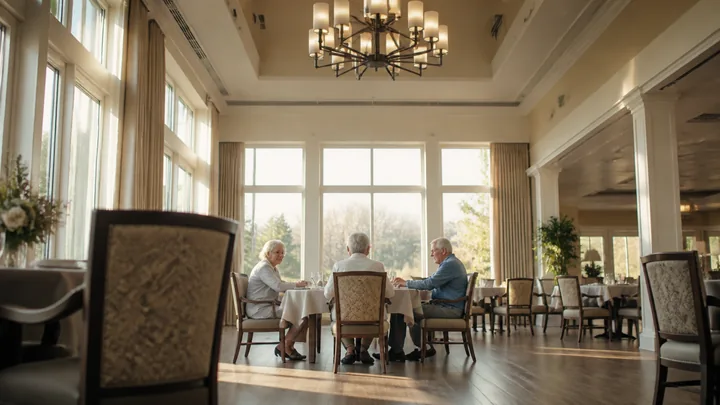
Daylight changes across the day and through the seasons. Review the room under daylight, mixed light, and evening conditions. Write down the intended settings and make the controls understandable to staff.
A simple, well-documented arrangement is preferable to settings that only one employee knows how to use. Include a procedure for reporting failed lamps or settings that no longer work after a room rearrangement.
Include faces, routes, and service areas
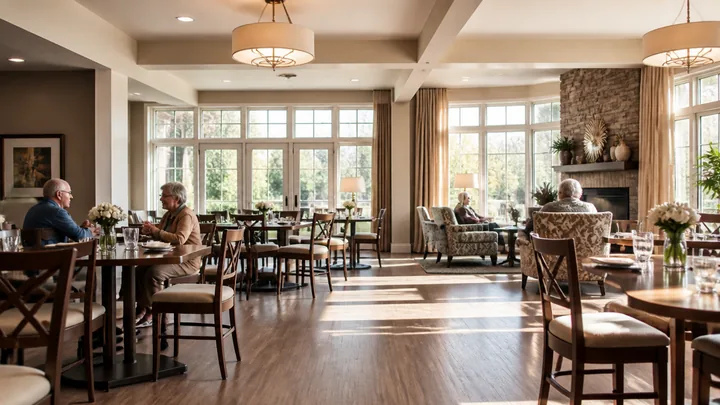
The table is only one task area. Review the entrance, routes between occupied chairs, serving points, and conversations across the table. Avoid a proposal that creates an attractive pool of light while leaving the approach difficult to see.
Coordinate lighting with furniture placement. Moving a table after installation may change both the lighting effect and the route around it. Give the lighting designer the intended occupied-room plan.
Approve a representative setup
Ask for a sample or mockup where practical. Review it with the selected finishes and seek feedback from residents and staff through the community's normal process. Technical lighting levels and applicable requirements should be confirmed by the project professionals.
Record fixture details, controls, cleaning access, replacement parts, and the approved table arrangement. That specification is more useful than an instruction to make the dining room “warm and bright.”
Sources and scope
These primary and research sources anchor the subject area; they do not turn every design recommendation in this article into a proven outcome. Verify current law, adopted code, licensing rules, care plans, and clinical requirements for the specific property.