
Jump to a section
Start at the vehicle
Observe where vehicles actually stop and where residents meet their usual assistance. Review weather exposure, traffic movement, luggage, and mobility-device handling with the relevant staff. This is an assessment of space and operations, not an instruction for carrying out transfers.
Ask the design team to review the loading area and its connection to the entrance under applicable access requirements. Include departures and waiting vehicles, not just a single arriving car.

Provide cover and a clear approach
Check the route during rain as well as in good weather. Look for water collecting at the door, mats moving out of position, and furniture narrowing the approach. Assign defects to maintenance and structural drainage questions to the appropriate professional.
Keep signs legible from the arrival direction. A visitor should be able to identify the entrance and where to ask for help without following a staff member through service areas.
Review the doors as a complete sequence
Map the space between successive doors, their swings, and the place someone waits for assistance. Consider the route while a person is using their usual mobility device.
Have qualified personnel assess opening equipment, controls, hardware, and required clearances. Do not wedge open fire doors or adjust closers as an informal accessibility fix. Problems with the door assembly need a coordinated solution.
Put waiting seats where they help
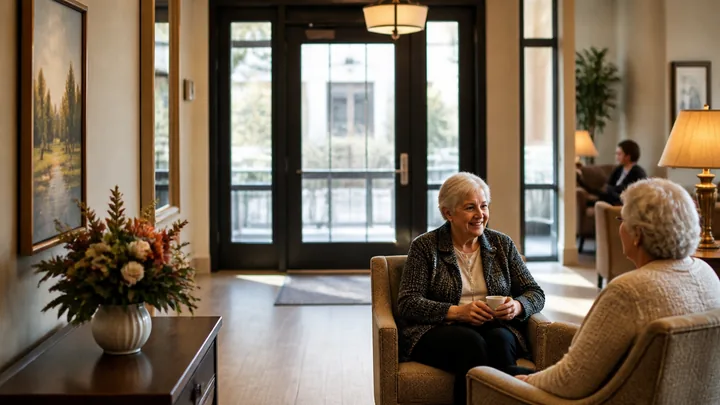
Provide suitable seating near the point where people wait, outside required door and circulation clearances. Include space for a companion, bags, and mobility devices without making them obstacles.
Check drafts, glare, and whether someone seated can see reception or their arriving transport. An attractive seat facing away from the entrance may be a poor choice for a resident waiting for a pickup.

Write a simple arrival routine
Agree who responds when someone needs help, how transport arrivals are communicated, and where deliveries go. Ensure reception staff know the route available to a visitor who cannot use a particular entrance.
Your finished review should contain a marked-up arrival plan and a short list of physical and operational changes. Check the result during a real arrival period; a quiet, empty entrance does not reveal the same conflicts.

Sources and scope
These primary and research sources anchor the subject area; they do not turn every design recommendation in this article into a proven outcome. Verify current law, adopted code, licensing rules, care plans, and clinical requirements for the specific property.